Skip to content

Choosing a cabinet finish is one of the most important decisions in a cabinetry project. It affects more than appearance: paint and stain perform differently, complement different wood species, and show wear differently over time. Selecting the right finish helps ensure your cabinets look beautiful, function well, and complement your home’s architecture. This is where the question of painted vs. stained cabinet finishes comes into play.
The main difference between painted and stained cabinets is how each finish interacts with the wood. Paint creates a smooth, uniform color that conceals the natural grain, while stain penetrates the wood and highlights its natural texture and character. Neither option is universally better. The right choice depends on your wood species, design preferences, lifestyle, and your home’s character.
For Greater Boston homeowners, those considerations can matter even more. A historic Beacon Hill rowhouse, a South End condo, and a Colonial in Newton or Wellesley each present different design opportunities. Existing architectural details, available natural light, and your property’s overall style can all influence which finish works best.
In this guide, we’ll compare painted vs. stained cabinets, explain how different wood species respond to each finish, examine long-term durability and costs, and help you determine which option makes the most sense for your cabinetry project.
Paint vs. Stain- WHAT PAINT AND STAIN ACTUALLY DO TO WOOD
Paint and stain interact with wood in fundamentally different ways. Wood stain cabinets and painted cabinets look different and perform differently in a real-world, day-to-day setting. Understanding how each works is the first step toward choosing a finish that delivers the appearance and performance you want.
How Paint Works on Cabinet Surfaces
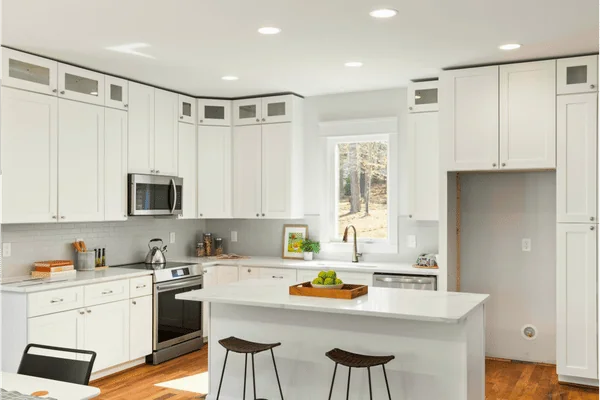
Paint sits on top of the wood, forming a protective film that conceals the natural grain and creates a consistent color. Because the grain is hidden, the underlying wood species matters less aesthetically. However, stability, surface preparation, and resistance to movement remain important.
At South Shore Custom Cabinets, we typically use maple or poplar for painted cabinet doors and face frames. Maple has a tight, consistent grain that creates a smooth surface and provides excellent stability. Poplar is a cost-effective alternative that also accepts paint well, particularly for built-ins and other interior applications.
Our finishing process includes high-quality primer and professionally applied finish coats, such as catalyzed lacquer or conversion varnish. These products create a harder, more durable surface than ordinary brush-applied latex paint. Proper preparation and controlled application are essential to achieving a consistent, long-lasting result.

How Stain Works on Cabinet Surfaces
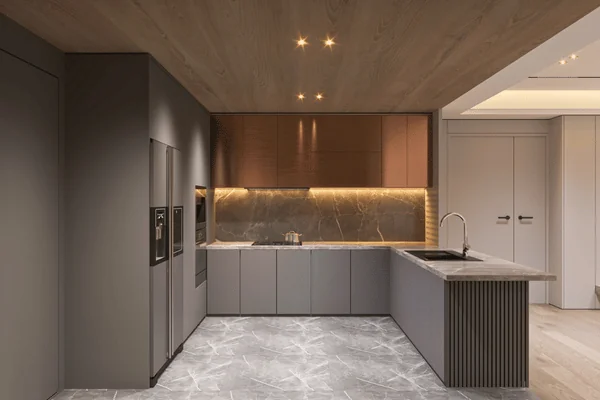
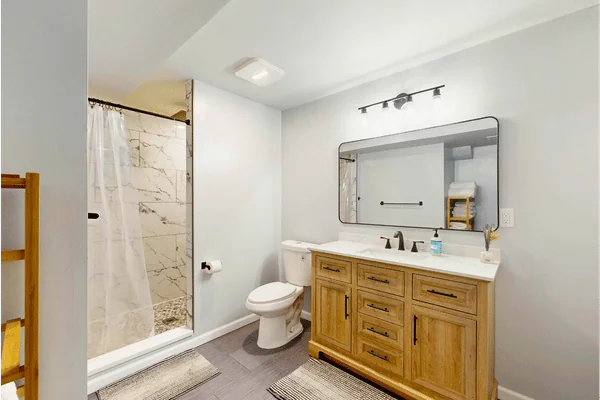
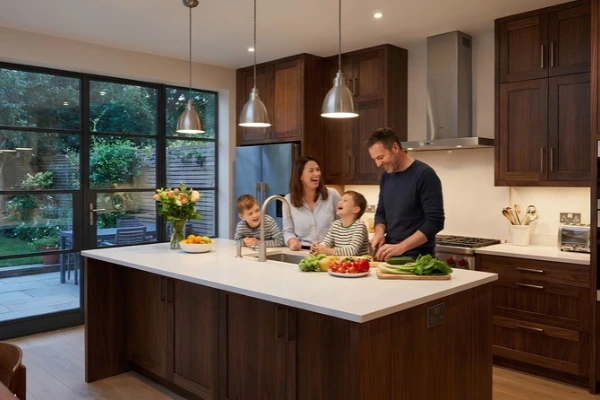
Stain penetrates the wood fibers, adding color while keeping the natural grain visible. This creates a warmer, more textured appearance, with variations in grain and color that make each cabinet door unique.
Wood species plays a particularly important role when choosing stain. Open-grained woods like white oak, red oak, and ash produce pronounced grain patterns, while cherry and walnut offer more refined grain variations and rich natural tones.
Maple can be more challenging to stain because its tight grain may absorb color unevenly, creating a blotchy appearance. Professional preconditioning and toning can help produce a more consistent result.

One important distinction: Stain alone does not protect cabinetry. After staining, we apply a protective clear topcoat, such as lacquer, conversion varnish, or polyurethane, to help seal the wood and protect it from everyday wear.
DURABILITY: HOW PAINT AND STAIN HOLD UP OVER TIME
When comparing painted vs. stained cabinets for durability, both can provide years of reliable performance when properly constructed and professionally finished. However, they respond differently to everyday use. Wood-stained cabinets and painted cabinets look different and will handle daily wear and tear differently, and this is worth keeping in mind as you make your choice.
Where Painted Cabinets Show Wear
These cabinets are more susceptible to visible chipping along door edges, corners, and other high-contact areas. Because paint forms a film over the wood, impacts or natural wood movement can cause that layer to crack or chip.
This is worth considering in high-use spaces like kitchens and mudrooms, particularly in older Greater Boston homes where seasonal humidity changes can contribute to wood movement.
Finish quality makes a significant difference. At our Quincy shop, painted cabinetry goes through a controlled sanding, priming, and multi-coat spray-finishing process before delivery and installation. A properly applied catalyzed lacquer or conversion varnish creates a harder, more durable surface than conventional brush-applied paint.
Touch-ups are another consideration. Matching the original color and sheen during a small spot repair can be challenging, especially if the finish has aged or been exposed to sun.
Where Stained Cabinets Show Wear
Stained cabinets tend to disguise minor scratches and scuffs more effectively because imperfections can blend into the natural grain. Some wood species, particularly cherry, also develop a deeper, richer appearance as they age and are exposed to light.
However, stained cabinetry still relies on its protective topcoat. That surface can scratch, dull, or wear down in frequently used areas.
One advantage is that you can sometimes refresh or refinish the protective topcoat without completely removing the underlying stain, making certain long-term maintenance projects more straightforward.
Painted vs. Stained Cabinets: Durability Comparison
| Consideration | Painted Cabinets | Stained Cabinets |
| Everyday wear | More visible chips and scratches | Minor scratches can blend into the grain |
| Edge durability | More susceptible to chipping | Natural wood color remains visible |
| Touch-ups | Color and sheen can be difficult to match | Often easier to blend minor repairs |
| Aging | Maintains a consistent color until the finish wears | Natural patina and color changes may develop |
| Maintenance | Occasional touch-ups and refinishing | Cleaning and periodic topcoat maintenance |
| Longevity | Can last for decades with proper care | Can last for decades with proper care |
Which finish is more durable? Neither automatically lasts longer. The quality of the wood, cabinet construction, finishing products, and application process influence longevity more than the choice between paint and stain alone.

WOOD SPECIES AND FINISH COMPATIBILITY
The wood species used in your cabinetry should directly influence your finish selection. This is one area where working with a custom cabinet shop makes a difference: we can help match the material to the finish rather than forcing a finish onto an unsuitable wood.
Best Wood Species for Painted Cabinets
- Maple: An industry-standard choice for painted cabinetry. Its tight, consistent grain creates a smooth surface that accepts primer and paint evenly. Maple is also a durable hardwood that holds up well in kitchens and bathrooms.
- Poplar: A practical, economical option for painted built-ins, bookcases, and furniture. It machines cleanly and accepts paint well, making it particularly useful for larger interior projects.
- MDF (medium-density fiberboard): Frequently used for painted door panels and certain cabinet components. Its lack of natural grain produces an exceptionally smooth painted surface. However, standard MDF isn’t ideal for moisture-prone applications unless properly specified and protected.
Best Wood Species for Stained Cabinets
- White oak: A popular choice for stained cabinetry, with pronounced grain and natural ray fleck patterns. It looks particularly attractive with light and medium stains and offers excellent durability.
- Cherry: A traditional New England favorite, cherry has a fine grain and warm reddish-brown color that deepens with age. It complements traditional and transitional interiors.
- Walnut: A premium hardwood with rich, dark tones and distinctive grain variation. It is an excellent choice for high-end kitchens, custom furniture, and office built-ins.
Choosing the Right Wood for Your Cabinet Finish
| Wood Species | Best Finish | Key Characteristics |
| Maple | Paint | Smooth, consistent grain and durable surface |
| Poplar | Paint | Cost-effective and easy to finish |
| MDF | Paint | Exceptionally smooth, grain-free surface |
| White oak | Stain | Pronounced grain and natural texture |
| Cherry | Stain | Warm tones that deepen with age |
| Walnut | Stain | Rich color and distinctive grain |
So what is better- painted vs. stained cabinets? It comes down to the materials used. Choosing the right wood and finish combination helps us create cabinetry that looks intentional and performs well over time. We can also discuss alternatives when your preferred appearance requires a different material or finishing approach.
Before

After

CHOOSING A FINISH FOR GREATER BOSTON HOMES AND PROPERTIES
Your home’s architectural character, available natural light, and interior design influence which cabinet finish works best. Here are a few considerations for different Greater Boston property types.
Historic Homes on Beacon Hill, the South End, and in Cambridge
Older Boston properties, including Federal-style rowhouses, Victorian brownstones, and triple-deckers, often feature original woodwork that defines the interior’s character.
When a home has existing wood trim, built-in bookcases, or period millwork in warm wood tones, stained cabinetry can complement those details and create a cohesive appearance.
Painted cabinetry can also work beautifully in historic properties. A carefully selected color and appropriate door style can create a fresh appearance without compromising the home’s architectural character. The key is choosing a finish that feels intentional alongside the existing details.
City Condos and Apartments in Boston and Cambridge
Smaller city properties often benefit from lighter painted finishes. Whites, warm off-whites, and soft grays can help kitchens and bathrooms feel brighter and more open, particularly where natural light is limited.
That doesn’t mean dark stained cabinetry is off the table. Used strategically, darker wood finishes can create contrast, depth, and visual interest without overwhelming a smaller room.
High-End Suburban Properties in Newton, Wellesley, and Needham
Larger suburban homes with open floor plans and generous natural light offer more flexibility. Both painted and stained finishes can work well, depending on the overall design.
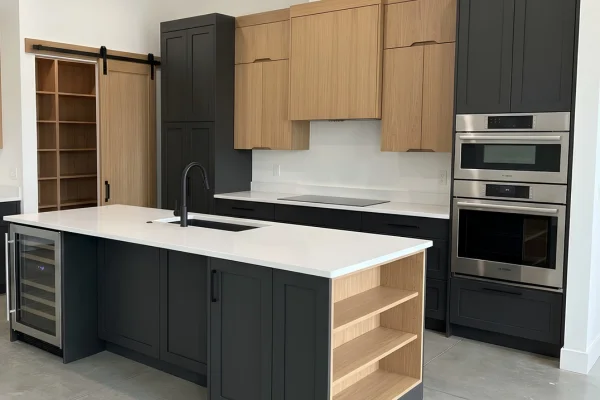
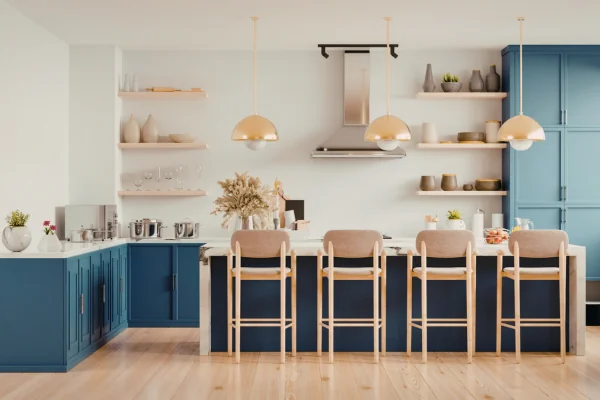
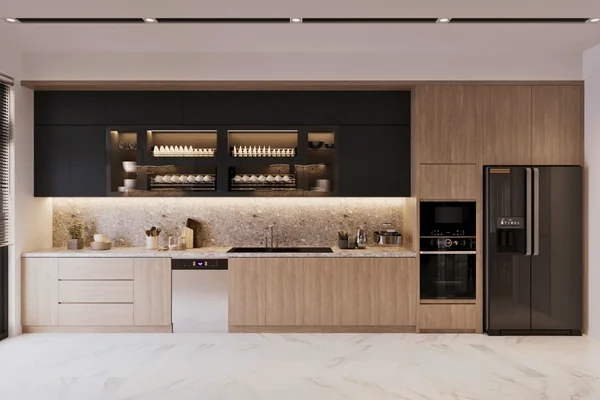
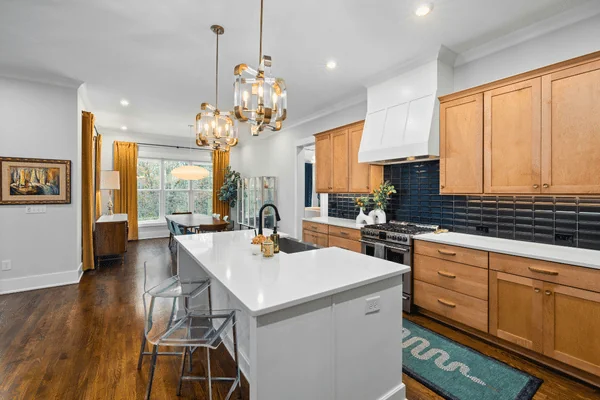
A popular approach is combining the two. For example, a transitional kitchen might feature painted perimeter cabinets with a contrasting white oak stained island. This creates visual interest while letting the wood’s natural beauty stand out.

DOES THE FINISH AFFECT PROPERTY VALUE?
A cabinet finish alone does not determine a home’s resale value, but the overall quality and condition of the cabinetry can influence buyer perception and market appeal.
What Buyers and Appraisers Notice With Paint vs. Stain Options
Buyers often notice kitchen and bathroom cabinetry early when evaluating a property. Chipped paint, worn finishes, visible damage, and poor workmanship can suggest deferred maintenance.
Conversely, well-built custom cabinetry with a professionally applied finish creates a polished appearance and can be an attractive feature for prospective buyers.
In the Greater Boston real estate market, where buyers often value quality interiors, durable materials, and thoughtful craftsmanship can help distinguish a property.
Are Painted Cabinets Outdated?
No. These cabinets remain a versatile and widely requested option for kitchens, bathrooms, and built-ins. White, off-white, and soft neutral finishes continue to work across a range of interior styles.
What can make cabinetry look dated is the combination of color, door profile, and hardware, not the finish itself. A well-designed painted cabinet with quality materials and appropriate detailing can remain attractive for years.
Does Painting Cabinets Devalue a Home?
Professionally repainting or refinishing existing cabinets does not automatically devalue a home. When the underlying cabinet boxes and doors are in good condition, refinishing can extend their useful life and refresh the appearance of a kitchen or bathroom.
The quality of the work matters. Visible brush marks, uneven coverage, peeling paint, and poorly prepared surfaces can detract from the finished result. We recommend evaluating the condition and construction of existing cabinetry before deciding whether refinishing or replacement is the better investment.
WHICH FINISH COSTS MORE?
The cost difference between painted and stained cabinetry is often smaller than homeowners expect. Both finishing methods involve material and labor considerations, and the overall project scope usually influences the final price more.
Understanding the True Cost Comparison
Stained cabinetry often requires more expensive wood species with attractive natural grain, such as white oak, cherry, or walnut. Painted cabinetry typically uses maple or poplar, which can be more economical.
However, achieving a smooth painted finish requires extensive preparation, including filling, priming, sanding between coats, and applying multiple finish coats. This adds labor to the process.
| Cost Consideration | Painted Cabinets | Stained Cabinets |
| Wood selection | Maple or poplar can reduce material costs | Premium hardwoods may increase material costs |
| Surface preparation | Extensive filling, priming, and sanding | Requires careful preparation and stain conditioning |
| Finishing process | Multiple paint and protective finish coats | Stain application followed by a protective topcoat |
| Overall project cost | Depends on materials and finishing complexity | Depends on wood species and finishing requirements |
The biggest cost drivers are generally the number of cabinets, design complexity, hardware selection, materials, and installation requirements.
When planning your project, we recommend looking beyond the initial finish price. Choosing inexpensive materials or cutting corners during application can affect both appearance and long-term performance. Quality custom cabinetry is an investment, and the finishing process should receive the same attention as construction and installation.

Painted vs. Stained Cabinets- Final Thoughts
Both painted and stained cabinets offer excellent results when paired with the right materials and professional finishing techniques. Paint provides a smooth, consistent appearance and works well across many design styles, while stain highlights the wood’s natural grain, warmth, and character.
The best choice depends on your preferred aesthetic, wood species, room conditions, maintenance expectations, and your home’s architectural character. Neither finish is inherently better; the goal is to select an option that complements your space and delivers lasting performance.
At South Shore Custom Cabinets, we build our projects with solid hardwoods and quality plywood, applying finishes in our controlled shop environment in Quincy before delivery and installation. From kitchen cabinetry in Cambridge to custom mudroom storage in Milton and library built-ins in Brookline, we approach every finish as an important part of the overall craftsmanship.
Not sure whether painted or stained cabinets are right for your project? Still have questions about painted vs. stained cabinets? Our team can help you compare wood species, explore premium cabinet finish options for built-ins, and select a solution that complements your home’s design and everyday needs.

FREQUENTLY ASKED QUESTIONS
What is the main difference between painted and stained cabinets?
Paint forms a film over the wood, concealing the natural grain and creating a uniform color. Stain penetrates the wood fibers, adding color while keeping the natural grain visible. Paint generally works well with maple, while stain suits white oak, cherry, and walnut. Both require a protective finish for durability.
Are painted cabinets still in style?
Yes, they remain a popular choice for kitchens, bathrooms, and built-ins. White, off-white, and neutral finishes work across traditional, transitional, and contemporary interiors. Cabinet style, color selection, hardware, and overall design influence whether cabinetry looks dated more than the paint choice itself.
Which lasts longer, painted or stained cabinets?
Both painted and stained cabinets can last for decades when properly constructed and finished. Painted cabinets are more susceptible to visible chips along edges, while stained cabinets tend to disguise minor scratches through their natural grain. Material quality, the protective topcoat, and the application process most influence longevity.
Does painting cabinets devalue a home?
Professional cabinet painting does not automatically devalue a home. Refinishing quality solid wood or plywood cabinetry can improve its appearance and extend its useful life. Poor preparation, uneven coverage, peeling paint, and visible brush marks can detract from the result, so professional application is important.
Which is cheaper, stained or painted cabinets?
The cost difference depends on the materials and finishing process. Stained cabinets may require more expensive hardwoods, such as walnut or white oak, while paint-coated cabinets require additional preparation and finishing labor. Overall project size, cabinet construction, design complexity, hardware, and installation typically have a greater impact on the final cost.